Certified Supplements for Athletes: Lists and Databases

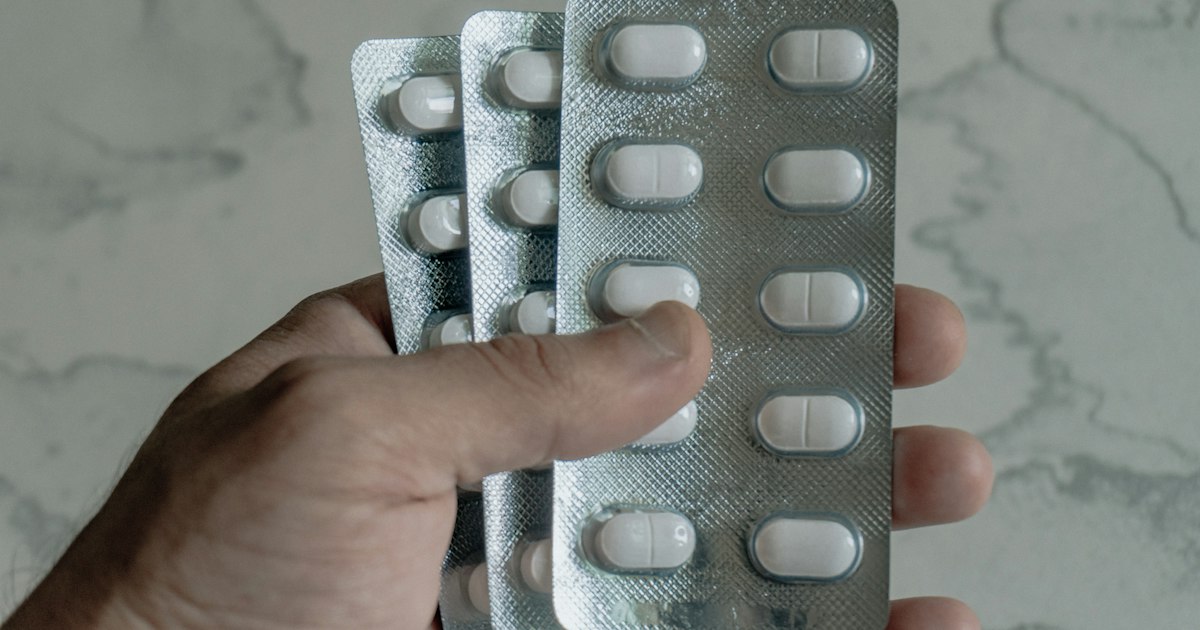
For an athlete subject to doping control, an ordinary tub of protein or a pre-workout can become the cause of a ban. Undeclared stimulants and prohormones in supplements have been detected for years. Certification programs and public databases of verified products are the main practical tool for reducing this risk. The editorial team explains how they are set up and where their limits lie.
Why ordinary supplements are not enough
In most countries the dietary supplement market is regulated like the food market, not the pharmaceutical one. A manufacturer is not obliged to prove the composition and purity of every batch before it goes on sale, and oversight mostly happens selectively or only after complaints. For an ordinary consumer this is an acceptable level of risk, but for an athlete subject to anti-doping rules it is not.
The best-known study of the problem was carried out by a laboratory in Cologne led by Hans Geyer. In 2004 it analyzed 634 non-pharmaceutical supplements from 13 countries, and roughly 14.8% of them contained undeclared prohormones or anabolic steroids. Later, similar work found stimulants such as DMAA (methylhexanamine) in products, as well as SARMs and diuretics.
Contamination comes in two types. The first is cross-contamination: when different products are packaged in sequence on the same production line, and traces of a substance from the previous batch end up in the next one. The second is the deliberate addition of active substances so that the product «works» more noticeably. In both cases there is no difference for the anti-doping system: the principle of strict liability applies.
The World Anti-Doping Code states directly that an athlete is responsible for any prohibited substance found in their sample, regardless of how it got there. Proven contamination of a supplement can only mitigate the sanction, but rarely cancels the violation entirely. That is why the IOC consensus on supplements (Maughan et al., 2018) advises elite athletes to use only products with independent batch testing.
A review by Outram and Stewart (2015) showed that estimates of the proportion of contaminated supplements vary widely between studies, depending on the country, category and methods of analysis. The most consistently risky products are «cutting» products, pre-workouts and mass-gaining agents with aggressive marketing.
Main certification programs and databases
There are several international programs that test supplements for prohibited substances and publish a list of products that have passed verification. They differ in origin, market coverage and the details of the procedure, but their goal is the same — to reduce the risk associated with contamination.
| Program / database | Who is behind it | Features |
|---|---|---|
| Informed Sport | LGC (United Kingdom) | Testing of every batch before it goes on sale; search by batch number on the website |
| Informed Choice | LGC | Regular selective testing of products without checking every batch |
| NSF Certified for Sport | NSF International (USA) | Verification of composition against the label and for prohibited substances; production audit; recognized by a number of US professional leagues |
| The Cologne List (Kölner Liste) | Olympic center in Cologne (Germany) | Public list of products whose batches have been tested; popular in Germany and Europe |
| BSCG Certified Drug Free | Banned Substances Control Group (USA) | Broad analytical spectrum, including substances prohibited in individual leagues |
| HASTA | Australia | Batch testing for the Australian market |
Most national anti-doping agencies do not «approve» supplements themselves but refer to these independent programs. For example, the British UKAD and the Australian sports system directly recommend looking for products with the logo of programs that test batches.
An important distinction is whether every batch is tested or only selective tests are done. In the first case an athlete can find in the database the specific batch number from the tub they are holding. In the second, the certificate applies to the brand or product in general, and the risk for an individual batch remains higher.
There is currently no Ukrainian national list of certified supplements, so domestic athletes usually rely on international databases. In doing so it is worth remembering that a product bought in a store must match the certified one by name, dosage form and batch number.

How batch testing works
The certification procedure usually consists of two levels. The first is a manufacturer audit: quality systems, raw material control, prevention of cross-contamination and batch traceability are assessed. The second is laboratory analysis of the finished product for a broad list of substances from the WADA Prohibited List.
The laboratories working in these programs use chromatography with mass spectrometry and search for substances from the classes most often found in contaminated products: anabolic agents, stimulants, beta-2 agonists, diuretics, hormone modulators. Checking the entire WADA Prohibited List in a food matrix is technically impossible, so the programs select the riskiest groups.
Only after obtaining a negative result does a batch earn the right to the logo and appear in the public database. If a prohibited substance is found in a batch, it is not released under the certification mark, and the manufacturer must investigate the cause.
Separately, programs such as NSF Certified for Sport also verify that the composition matches the label: whether the product really contains the declared amount of active ingredients and whether it is free of heavy metals or microbial contamination above the permissible limits.
How to use the databases in practice
Checking a supplement should become as routine a step as checking medications against a database of prohibited substances. The editorial team offers a simple algorithm that can be carried out in a few minutes before a purchase or before opening a new tub.
- Ask yourself whether the supplement is needed at all: whether there is proven benefit and whether the task cannot be solved with an ordinary diet.
- Find the product on the official website of the certification program, not just by the logo on the label or in advertising.
- Check the exact name, flavor, dosage form and batch number from the tub against the data in the database.
- Keep a screenshot of the record, the receipt, the packaging and a small amount of the product — this can become evidence in the event of an adverse analytical finding.
- Check the composition against the WADA Prohibited List for the current year and consult the team doctor or a sports nutritionist.
The logo on the tub is not a guarantee in itself. There are cases of unauthorized use of the branding, where the product never underwent testing. That is precisely why the key thing is verification in the database on the program's official resource.
It is also worth paying attention to the country of sale. The same brand may release different versions of a product for different markets, and only one of them will be certified. Buying from official distributors reduces the risk of counterfeits.
Documentation is an underrated step. If an athlete can show that they used a certified product from a specific batch, and a repeat analysis of that batch confirms contamination, this significantly affects the assessment of the degree of fault when the case is considered.
The limits of certification and the athlete's responsibility
No program provides a hundred-percent guarantee. A laboratory checks a limited list of substances with a certain detection limit, while anti-doping laboratories analyzing athletes' urine and blood often work with even lower concentrations. That is why the programs' own wording is cautious: they speak of «minimizing risk», not of «guaranteed purity».
In addition, certification says nothing about a product's effectiveness. A protein or vitamin may be perfectly clean but unnecessary for a particular athlete. The IOC consensus stresses that the decision about supplements should be based on an assessment of need, evidence of effect and safety, and not merely on the absence of prohibited substances.
Finally, some supplements contain substances that are themselves prohibited, regardless of the purity of manufacture. For example, individual plant extracts may contain stimulants, and «natural testosterone boosters» are sometimes positioned with ingredients that have hormonal activity. Certifying such products is impossible in principle.
A review by Garthe and Maughan (2018) shows that most elite athletes use supplements, and decisions are often made under the influence of coaches, teammates and advertising. Systematic work with a team doctor and the use of certified products is a practical way to reconcile the desire to improve results with the demands of clean sport.
Editorial conclusions
Contamination of sports supplements is a documented problem, and the principle of strict liability shifts the consequences onto the athlete. The certification programs Informed Sport, NSF Certified for Sport, the Cologne List, BSCG and others are the best available way to reduce this risk.
The greatest value lies in checking a specific batch in an official database and preserving evidence of its use. The logo on the tub without such verification means little.
At the same time, a certificate does not replace the critical question «why do I need this supplement» and does not make safe substances that are prohibited in themselves.
We also recommend reading our materials on the WADA Prohibited List, on the therapeutic use exemption (TUE) procedure and on the most common sources of inadvertent doping in dietary supplements.
References
- Maughan RJ, Burke LM, Dvorak J, et al. IOC consensus statement: dietary supplements and the high-performance athlete. Br J Sports Med. 2018;52(7):439–455.
- Geyer H, Parr MK, Mareck U, et al. Analysis of non-hormonal nutritional supplements for anabolic-androgenic steroids — results of an international study. Int J Sports Med. 2004;25(2):124–129.
- Outram S, Stewart B. Doping through supplement use: a review of the available empirical data. Int J Sport Nutr Exerc Metab. 2015;25(1):54–59.
- Garthe I, Maughan RJ. Athletes and supplements: prevalence and perspectives. Int J Sport Nutr Exerc Metab. 2018;28(2):126–138.
- World Anti-Doping Agency. World Anti-Doping Code. Montreal: WADA; 2021.
- World Anti-Doping Agency. The Prohibited List. Montreal: WADA; щорічне видання.
Andriy Melnyk
A strength-sports coach and author of programs for beginner and intermediate levels. Writes about training planning.